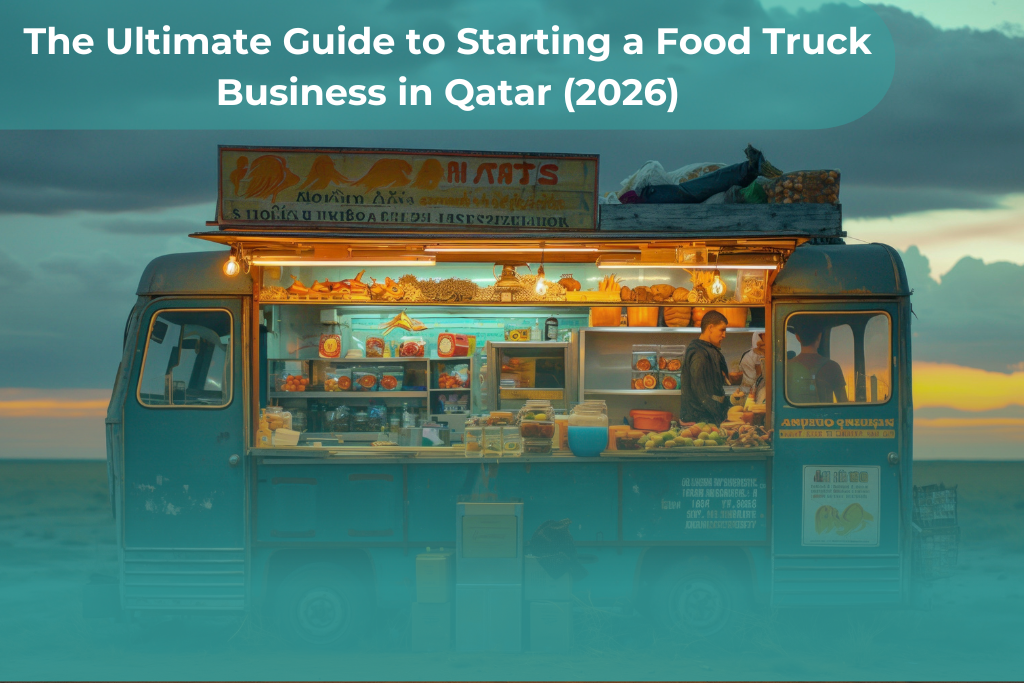
Food truck business in Qatar is becoming one of the fastest-growing opportunities for entrepreneurs looking to enter the country’s vibrant food and beverage industry. With increasing tourism, major sporting events, food festivals, corporate gatherings, and a growing demand for convenient dining experiences, mobile food businesses are gaining significant popularity across Qatar.
Supported by Qatar National Vision 2030, the country continues to encourage entrepreneurship and private sector growth, making it an attractive destination for local and foreign investors. Whether you plan to serve gourmet burgers, Arabic cuisine, coffee, desserts, healthy meals, or international street food, starting a food truck business offers lower startup costs than opening a traditional restaurant while providing greater flexibility to reach customers across different locations.
Many entrepreneurs also seek professional assistance with company formation in Qatar to simplify the registration process and ensure compliance with local regulations. In addition, PRO services in Qatar can help manage government documentation, licensing procedures, and approvals, while MOFA attestation in Qatar may be required for certain foreign-issued documents used during business setup.
Prior to understanding the laws of the food truck business in Qatar, one must first understand the reasons why the food truck business is so popular in the Qatar market:
Opening a food truck is not as simple as buying a vehicle and cooking. Obtaining a food truck business in Qatar involves meticulous planning and approvals from three main government bodies: the Ministry of Commerce and Industry (MOCI), the Ministry of Public Health (MOPH), and the Ministry of Municipality.
Here is the exact step-by-step process.
The concepts determined how people work and what equipment they use. Whereas regular restaurants require many services/menus, food trucks thrive with the right and unique concept, whether one is after a coffee-only truck, a Karak truck, a gourmet smash burger truck, or even desserts.
It would help if you learned about the people to whom your food will be delivered.
First, you’ll need to have a registered company in order to obtain any permits related to food truck business in Qatar. The registration process is taken care of by the Ministry of Commerce and Industry.
Even though your business might be a mobile one, the State of Qatar requires – if you want to receive a Trade License – a commercial premises for conducting business activities. For instance, with a food truck, you must typically have a commercial office space to run the administration of your business. In addition, depending on how much food you are preparing your truck may also need to have an approved “base kitchen” or commissary, providing preparation of large-scale food.
You cannot just use any kind of regular vehicle. The food truck used in Qatar should be an adapted vehicle with its own kitchen and serving area.
The vehicle must meet the safety and health standards. The key factors to consider are the following:
Fires can be hazardous even in Qatar. Before you can start operating, your mobile food business must undergo strict inspections by Qatar’s Civil Defense department, which will include checks on gas, fire suppression systems, ventilation systems, and fire extinguishers.
The MOPH permit is arguably the most important and strictest approval among the documentations. The ministry ensures that the services provided by the mobile food business are safe for consumption.
To obtain the permit, you will have to submit:
Once MOPH approval is obtained, an application is to be filed with the Ministry of Municipality for the final Trade License.
Unlike other forms of delivery, food trucks are restricted from parking on the roadside in order to sell food. A license must be acquired to operate from specific locations. Popular locations like the Lusail Marina, Katara, or different sport clubs will conduct their own vendor leasing.
Once the Trade License is officially issued, the company could be registered with the Ministry of Interior to obtain the establishment ID (Computer Card). The license is necessary to obtain a visa quota and hire foreign personnel (cooks, baristas, drivers).
Budgeting accurately is the cornerstone of a successful food truck business in Qatar. While costs vary drastically based on your menu, vehicle choice, and location, here is a general breakdown of what to expect:
| Service Level | Expense Category | Description |
|---|---|---|
| Government Licensing | Government Licensing Fees | Includes MOCI registration, Commercial Registration (CR) fees, Baladiya Trade License, and Ministry of Public Health (MOPH) permits required to operate a food truck in Qatar. |
| Food Truck Investment | Food Truck Purchase | Covers the purchase or lease of a new or used food truck. Costs vary depending on the vehicle’s size, condition, and equipment. |
| Kitchen Setup | Kitchen Customization | Includes stainless steel interiors, commercial cooking equipment, fryers, grills, espresso machines, sinks, ventilation systems, and refrigeration units. |
| Business Premises | Base Office/Kitchen Rent | Monthly rental for your registered commercial office or licensed preparation kitchen required for food truck operations. |
| Human Resources | Staffing & Visas | Includes employee visa processing, airfare, medical examinations, QID issuance, accommodation, and initial staff salaries. |
| Operating Location | Pitch Rentals | Monthly or seasonal rental fees paid to the venue owner or municipality for operating at locations such as Lusail, Katara, or other approved food truck zones. |
| Launch & Promotion | Initial Inventory & Marketing | Includes POS systems, raw food ingredients, packaging materials, branding, and promotional campaigns for your food truck’s grand opening. |
Operating a food truck business in Qatar has its benefits but it entails specific challenges of its kind.
Yes. Foreigners can own a food truck business in Qatar. Depending on the legal structure, such as a Limited Liability Company (LLC), a Qatari partner may be required. However, Qatar’s foreign investment regulations now provide greater flexibility for foreign ownership in many business activities.
If all required documents, vehicle modifications, and kitchen layouts meet the regulatory requirements, obtaining a Commercial Registration (CR), Trade License, and other approvals typically takes between 4 and 8 weeks.
Yes. Although a food truck is a mobile business, the Ministry of Commerce and Industry (MOCI) and Baladiya regulations require every business to have a registered commercial address before a Trade License can be issued.
No. Food trucks can only operate in approved locations after obtaining the necessary permits and lease agreements. Operating in unauthorized or restricted areas may result in fines, penalties, or suspension of your business license.
The Ministry of Public Health (MOPH) generally requires food establishments to renew their health permit annually. Renewal includes a fresh inspection of the food truck and valid health cards for all food-handling employees.
The food truck business in Qatar offers an exciting opportunity for entrepreneurs looking to enter one of the country’s fastest-growing industries. With increasing demand for mobile dining, supportive government initiatives, and a strong consumer market, launching a food truck can be a profitable and scalable business venture.
If you’re planning to start a food truck business in Qatar, contact us today. Our experienced team will assist you with company formation, Commercial Registration (CR), trade licensing, municipality approvals, food safety compliance, and every step required to launch your business successfully in Qatar.
Starting a food truck business in Qatar requires obtaining the necessary business licenses, municipal approvals, health permits, and a suitable operating location. Whether you’re a local entrepreneur or a foreign investor, understanding the legal requirements can simplify the setup process. If you’re planning company formation in Qatar, establishing the correct business structure is the first step toward launching a successful and compliant food truck business.
Copyright © 2024 QCF Global Services. All Rights Reserved.