
Set up a last-mile delivery service in Qatar and capitalize on one of the fastest-growing sectors in the country’s digital economy. With the rapid growth of e-commerce, online shopping, food delivery applications, pharmacies, grocery delivery platforms, and same-day courier services, the demand for efficient last-mile delivery solutions continues to rise across Qatar.
Today, many companies rely on dependable delivery services to get their products and services directly to consumers, including businesses involved in franchise business in Qatar operations that require efficient logistics support. As consumers demand more rapid delivery times, it has opened up an opportunity for entrepreneurs to create successful last mile delivery companies.
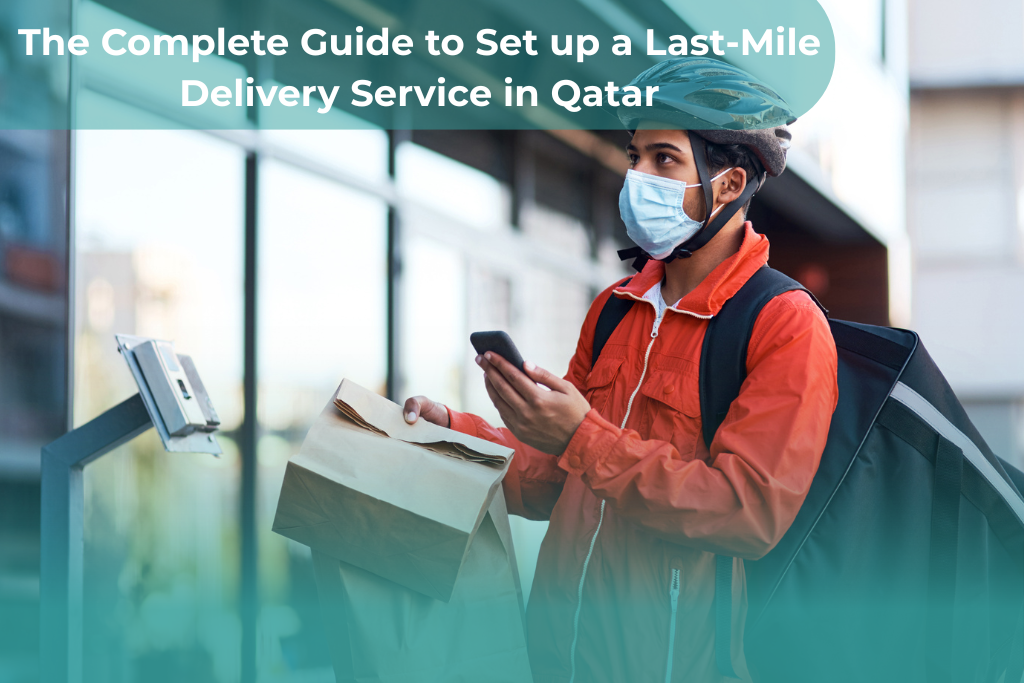
Defining a business niche to do before starting a business in Qatar . The connected people within Qatar require fast and reliable delivery services, and the increase in parcel volumes combined with the rise of e-commerce puts a major strain on delivery services providing next day or same-day delivery from when they place their order.
Key Last Mile Sectors
When you set up your business, you can select from several different jurisdictions in Qatar. Understanding the requirements for company formation Qatar is essential before choosing the most suitable jurisdiction.
| Jurisdiction | Ownership Limit | Best Suited For | Key Advantage |
|---|---|---|---|
| Mainland (MOCI) | Up to 100% Foreign Ownership (subject to approval) | Direct consumer deliveries across all municipalities. | Total market access without geographical restrictions. |
| Qatar Financial Centre (QFC) | 100% Foreign Ownership | Digital logistics platforms, fintech integrations, and B2B professional services. | Operates on an English common law framework and independent regulatory body. |
| Qatar Free Zones (QFZA) | 100% Foreign Ownership | Large-scale logistics hubs, warehousing, and international fulfillment. | Tax exemptions and proximity to ports/airports. |
Submit your desired company name to the Ministry of Commerce and Industry (MOCI), ensuring it’s descriptive of your service.
The AoA must describe what kind of business you are going to do (e.g., courier services and light transport). The AoA also must be notarized through a notary public Qatar process.
After you receive approval for the AoA, the MOCI will issue your CR, creating the legal entity you used to register.
You will need to secure your own office or dispatch warehouse before you can apply for a Trade License from the Ministry of Municipality. Then you will need to apply to the Ministry of Interior for your Computer Card (Establishment Card), which is required to hire employees.
As a logistics and transport business, your fleet operations and safety procedures must be evaluated and approved by the Ministry of Transport (MOT).
Last-mile delivery covers different times of the week and also during the holidays; there is much variability within the workloads. Manual dispatching often leads to delays, errors, and operational inefficiencies, making a reliable technology stack essential.
Essential Software Requirements:
The vehicles you choose will dictate your operational costs and service capabilities. Because Qatar is heavily urbanized, a mix of vehicle types is often required.
| Vehicle Type | Primary Use Case | Benefits |
|---|---|---|
| Motorcycles | Document delivery, hot food, small parcels. | Highly agile in traffic, easy to park in crowded residential zones. |
| Light Vans (e.g., Nissan Urvan) | Standard e-commerce parcels, bulk grocery drops. | High cargo capacity, protects goods from extreme summer heat. |
| Refrigerated Trucks (Chillers) | Pharmaceuticals, perishables, catering. | Strict temperature compliance, high margin B2B contracts. |
You cannot run your business without your drivers; they are truly the face of your company. When hiring foreign employees to work in Qatar, all employers must comply with rigid conditions set out by the Kafala system as mandated by the Ministry of Labour.
Businesses should understand the cost of traditional delivery trucks and their operations while factoring in expensive delivery costs caused by traffic congestion and failed deliveries. A successful pricing model will balance market competitiveness with the costs of operating a delivery business.
The cost depends on company registration, licensing, office rent, vehicle purchases, employee visas, insurance, and technology systems.
A Limited Liability Company (LLC) is generally the most common and flexible structure.
Typically, Commercial Registration (CR), Trade License, Computer Card, and any activity-specific approvals are required.
Retail, food and beverage, healthcare, pharmacies, e-commerce, supermarkets, and corporate sectors frequently require delivery services.
Courier services often focus on documents and parcels, while last-mile delivery covers a broader range of products and customer deliveries.
Set up a Last-Mile Delivery Service in Qatar to take advantage of the country’s rapidly growing e-commerce and logistics sectors. With increasing consumer demand for fast, reliable deliveries, entrepreneurs have significant opportunities to build successful delivery businesses. Contact us today to receive expert support with company registration, licensing, and business setup in Qatar.
By securing the necessary licenses, obtaining Commercial Registration, building an efficient fleet, implementing modern technology, and maintaining compliance with local regulations, you can establish a profitable and scalable last-mile delivery company in Qatar in 2026 and beyond.
Set up a last-mile delivery service in Qatar involves choosing the right business structure, obtaining the necessary licenses, and completing the legal registration process. Understanding regulations, operational requirements, and logistics infrastructure is essential for smooth entry into the market. With proper planning and company formation in Qatar, entrepreneurs can successfully launch and scale a competitive delivery business in the growing Qatari e-commerce sector.
Copyright © 2024 QCF Global Services. All Rights Reserved.
