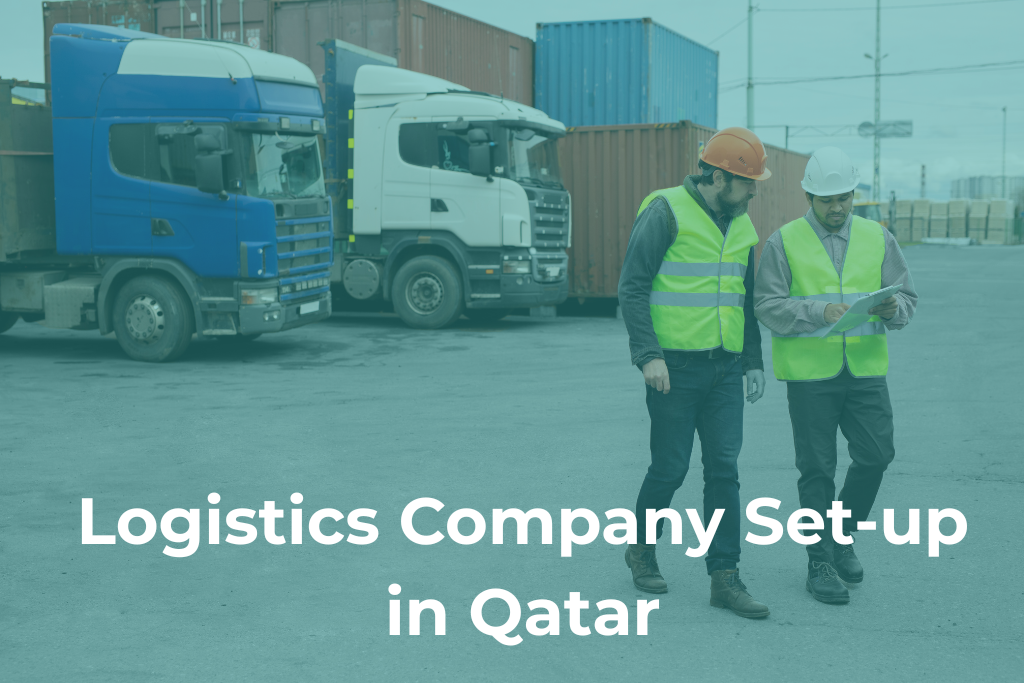
Setting up a logistics company set-up in Qatar is one of the most lucrative business ventures in 2026. Qatar is situated in a strategically advantageous location with strong infrastructure and an increasing demand for transportation and supply chains. As a result, the logistics sector continues to experience rapid growth.
As a direct gateway between Asia, Europe, and the Middle East, Qatar is an ideal logistics hub. From importing/exporting to e-commerce, there is a consistent increase in the demand for logistics services. Entrepreneurs investing in a logistics company set-up in Qatar can enjoy sustainable growth opportunities with their businesses for many years to come.

There are numerous reasons a logistics company set-up in Qatar provides a profitable opportunity for investment. Consider the following points:
Qatar is recognized as an important trade hub that provides direct access to the global market.
As international trade activities of importing and exporting continue to grow, the demand for logistics services continues to increase.
Qatar has advanced ports, highways, and airports that support all aspects of the logistics business.
The Qatari government actively supports business development and provides incentives for foreign investors wanting to open businesses in Qatar.
With all the above considered, this is an extremely attractive business opportunity.
Before you can create your logistics business in Qatar, you should identify your business model:
Global trade hub connecting major regions
Rising import & export demand
Advanced ports & transport systems
Business-friendly policies
To legally operate your business, you must comply with several requirements:
Register your company and obtain a Commercial Registration (CR).
Apply for a trade license based on your specific business activity.
Ensure compliance with local zoning and operational regulations.
Required for import-export logistics operations.
Obtain specific approvals from the Ministry of Transport for vehicles used in logistics services.
Working with corporate experts can significantly simplify this process.
| Steps | Title | Processes |
|---|---|---|
| Step 1 | Choose Business Activity | Select the specific logistics services your company will offer to determine licensing requirements. |
| Step 2 | Select Company Structure | Decide between mainland LLC, free zone entity, or other business structures based on ownership goals. |
| Step 3 | Reserve Trade Name | Choose a unique business name and get approval from the relevant authority. |
| Step 4 | Obtain Initial Approval | Get initial approval from authorities for your selected business activity. |
| Step 5 | Prepare Legal Documents | Submit required documents such as shareholder details and Articles of Association. |
| Step 6 | Get Commercial Registration and License | Obtain your Commercial Registration (CR) and trade license to operate legally. |
| Step 7 | Set Up Office and Infrastructure | Arrange office space, warehouse, and acquire transport vehicles as required. |
Starting a logistics business requires careful financial planning.
Business registration fees, licensing costs, office setup, equipment, and transport vehicles.
Staff salaries, fuel and maintenance, warehouse rent, and commercial insurance.
To grow your logistics company set-up in Qatar, you need strong marketing strategies:
Create a professional website and optimize it for search engines.
Promote your services on professional platforms like LinkedIn.
Collaborate directly with retail and e-commerce businesses that require regular logistics services.
Providing reliable service builds long-term relationships and strong word-of-mouth.
While highly lucrative, running a logistics company comes with specific industry challenges:
The market has established players, requiring new entrants to find a unique niche or offer superior service.
Navigating customs laws, transport regulations, and vehicle permitting can be complex.
Securing warehouses and a fleet of transport vehicles requires significant upfront investment.
Global shipping delays or economic shifts can directly impact your day-to-day operations.
The logistics industry in Qatar is expected to grow further due to e-commerce expansion, continued infrastructure development, and international trade growth. Entrepreneurs investing in a logistics business in Qatar today can benefit from exceptional long-term opportunities.
You will need a commercial registration, trade license, municipality approval, and specific transport permits.
The first step is defining your specific business activity and applying for initial approval from the relevant authorities.
Yes, free zones offer massive benefits like 100% foreign ownership for a logistics company set-up in Qatar.
Building B2B partnerships, online marketing, and professional networking help attract corporate clients.
Yes, demand is rapidly increasing due to international trade, e-commerce, and infrastructure growth.
Common challenges include high initial operational costs, market competition, and maintaining regulatory compliance.
Yes, Qatar’s strategic location as a global transit hub allows logistics companies to expand globally with ease.
Yes, comprehensive commercial insurance is vital to protect goods in transit, vehicles, and daily business operations.
Services include transportation, warehousing, freight forwarding, customs clearance, and supply chain management.

Completing a logistics company set-up in Qatar offers high potential for future business growth based on the rising demand for logistics services, Qatar’s geographic location, and strong support from the Qatari government. Entrepreneurs who follow the appropriate legal procedures, select an optimal business model, and develop effective operational strategies will find immense success.
With correct planning, investment, and execution, establishing a logistics business in Qatar will produce long-lasting, sustainable profitability. If you need professional support to get started, contact us today.
Copyright © 2024 QCF Global Services. All Rights Reserved.