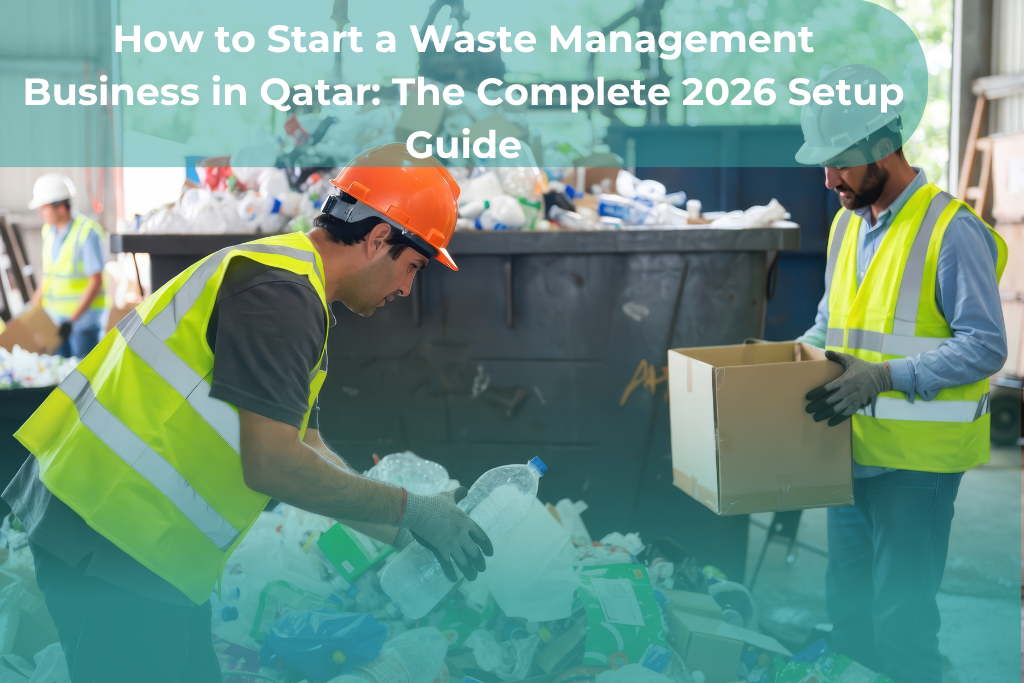
Start a waste management business in Qatar to enter a sector that supports Qatar’s growing commercial, industrial, residential, construction, and infrastructure activities. As businesses, residential communities, construction projects, restaurants, offices, and industrial facilities generate different types of waste, professional waste collection and management services play an important role in maintaining clean and compliant operations.
Qatar’s continued economic development and infrastructure investment have created opportunities for businesses involved in environmental services, waste collection, recycling, transportation, treatment, and related activities. However, entrepreneurs looking to start a waste management business in Qatar must understand the applicable business activities, licensing requirements, environmental approvals, transportation requirements, premises requirements, and other regulatory obligations before starting operations. Entrepreneurs planning their business setup can also explore professional company formation in Qatar services to understand the registration and licensing process.
Before registering your company, you must precisely define your niche. The permits you require will vary drastically depending on the type of waste you intend to collect, transport, or process. The most lucrative sectors in Qatar include:
If you plan to start a waste management business in Qatar, selecting the correct business activity is one of the most important initial steps, as the concept of “waste management” can refer to various activities. A regular waste collection service provider may require different documents and approvals compared with a company dealing with hazardous waste, recycling operations, waste treatment, or disposal services.
Before applying for a license, make sure that you define:
Depending upon your business model and eligibility, the business structure options may include:
However, free zones can include different rules and market access possibilities, thus eliminating the possibility of free zone companies.
For businesses considering alternative registration options, register a company in QFC can also be explored depending on the nature and requirements of the business.
In order for companies to proceed to trade name registration, they must first select an organizational structure and type of business.
The proposed trade name must conform to all legislative naming standards.
Business owners should refrain from choosing names that:
Once the business activity and the trade name have been agreed upon, the next step is applying for a Commercial Registration (CR).
The CR will allow the company to become a formalized entity, and to define its permitted business ventures.
The documentation will depend on the type of business and activity that will be conducted, but will usually involve:
Each business has its unique requirements, depending on its ownership and types of activities it is going to conduct.
When you start a waste management business in Qatar, this stage is one of the most significant. Waste operations may involve specific environmental requirements in addition to general company registration and licensing requirements.
Depending upon the type of operations necessary approvals may be as regards:
The appropriate authority and approvals which need to be obtained will vary according to the waste management operation type.
Entrepreneurs may also require notary public Qatar services for certain business-related documentation and procedures.
Additional documentation requirements may also involve MOFA attestation in Qatar depending on the documents and circumstances involved in the business setup process.
According to the business model, the appropriate commercial premises may be required.
The facilities are to provide for:
The site should comply with the required nature of the activity and municipal, ecological, security, and any other requirements.
In a situation when the business is supposed to physically collect, store, process, and recycle waste, a common office is unlikely to do.
Upon obtaining the necessary licenses and authorizations, a company can set up its operational framework.
The following equipment may be utilized based on the chosen business model:
Employees should also get proper training in terms of waste disposal, safety at work, transport procedures, and environment regulations.
Heavy equipment operations and the handling of hazardous waste will require a skilled labor force.
Businesses may also consider PRO services in Qatar for assistance with government-related procedures, documentation, and administrative requirements.
Opening an industrial waste management company is not a rapid process; it requires patience and substantial capital.
| Phase | Description | Estimated Time |
|---|---|---|
| Phase 1 | Corporate Setup (Trade Name, AoA, CR) | 1 – 2 Weeks |
| Phase 2 | Land Acquisition & Environmental Impact Assessment (EIA) | 2 – 3 Weeks |
| Phase 3 | MECC Environmental Clearances | 1 – 2 Weeks |
| Phase 4 | Facility Construction & Fit-out | 1 – 2 Months |
| Phase 5 | Civil Defence & Baladiya Trade License | 1 – 2 Weeks |
| Total | End-to-End Industrial Setup | 1 to 2 Months |
Beyond the standard government MOCI and Baladiya licensing fees (which range from QAR 5,000 to QAR 15,000 annually), the primary financial barriers to entry are:
Industrial Land Leases: Long-term leases in Al Afja or Mesaieed.
Entrepreneurs exploring other business opportunities in Qatar can also refer to open a small business in Qatar for additional information about starting a business.
Standard mainland waste management businesses typically require a 51% Qatari partner under the WLL structure. However, under the Foreign Investment Law, foreign companies that bring highly specialized, innovative green technologies (such as advanced waste-to-energy systems) can apply to the MOCI for an exemption to own up to 100% of the business, subject to strict government review.
The Ministry of Municipality has specifically designated the Al Afja area in the Mesaieed Industrial Zone as the primary hub for recycling and waste management industries. Setting up here makes obtaining environmental and municipal approvals significantly easier, as the land is pre-zoned for these activities.
Yes. While general transport trucks require standard commercial registration, any vehicle transporting hazardous materials, medical waste, or industrial chemicals must be individually inspected and granted a specific Hazardous Waste Transport Vehicle Permit by the Ministry of Environment and Climate Change (MECC).
The Ministry of Environment and Climate Change (MECC) is the ultimate authority on waste handling in Qatar. Before you can build your facility or obtain a Trade License, the MECC must review your Environmental Impact Assessment (EIA) and grant environmental clearance to ensure your operations will not pollute the air, soil, or ground water.
Start a waste management business in Qatar by first identifying the correct business activity, selecting a suitable legal structure, obtaining the required Commercial Registration and licenses, securing compliant premises, and completing any applicable environmental approvals. The operational requirements can vary significantly depending on whether your company focuses on general waste collection, construction waste, recycling, transportation, industrial waste, or specialized waste management.
A successful setup requires more than simply registering a company. Entrepreneurs should carefully plan their licensing, environmental compliance, vehicles, equipment, staffing, premises, and customer acquisition strategy.
If you are planning to start a waste management business in Qatar, contact QCF Global Services for professional assistance with company formation, licensing, documentation, government procedures, and business setup requirements. Our team can help you understand the applicable requirements and organize the setup process according to your proposed business activity.
Start a waste management business in Qatar and tap into the country’s growing focus on sustainability, recycling, and environmental solutions. With the right planning and expert guidance on company formation in Qatar, you can confidently establish your waste management venture and navigate key regulatory and licensing requirements.
Copyright © 2024 QCF Global Services. All Rights Reserved.