Registering a contracting company in Qatar is one of the best ways to enter one of the Middle East’s fastest-growing construction markets. Qatar continues to invest billions of riyals into infrastructure, commercial developments, industrial projects, transportation networks, residential communities, and smart city initiatives as part of Qatar National Vision 2030.
The country’s ongoing economic diversification has created substantial opportunities for investors seeking to establish contracting businesses. Whether your company specializes in general contracting, civil works, building construction, maintenance services, infrastructure projects, MEP contracting, or project management, understanding the registration process is essential for long-term success. Many investors exploring company formation Qatar opportunities are increasingly considering the contracting sector due to its long-term growth potential.
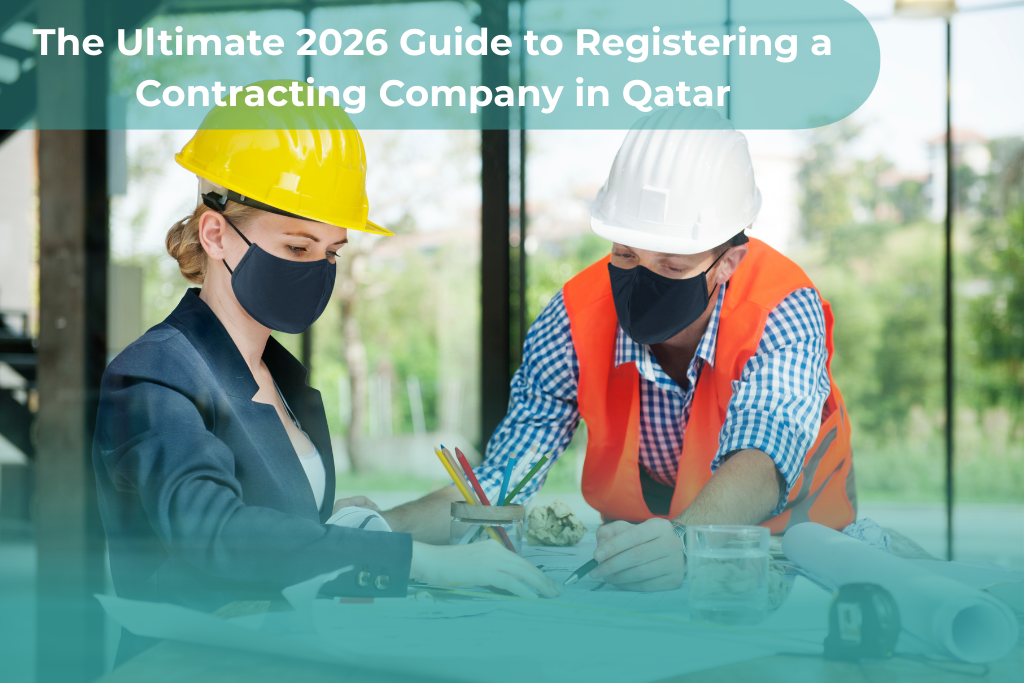
Many investors choose to register a contracting company in Qatar because of the country’s long-term infrastructure growth.
Qatar is working hard to change from being a primarily carbon-dependent economy to a more infrastructure and knowledge-based economy. The Qatari government has invested heavily in developing the non-oil-related aspects of the country’s economy. Qatar is developing four mega-projects about which companies from all over the world are looking for qualified contractors; they are expanding the Doha Metro System, building and operating Hamad International Airport, Nine new hospitals and educational campuses and building Smart City projects in both Lusail and Msheireb. These developments continue to drive demand for both contracting services and broader Trading Company Set-Up in Qatar opportunities.
Qatar puts budgeted money into projects like civil works and building construction, so there will always be construction opportunities available. In addition, there are many specialized construction opportunities, such as:
Qatar has a stable government and banking sector as well as business-friendly tax structures. Qatar’s tax rate for foreign-owned companies on the mainland is 10% percent based on profits earned locally, and Qatari citizens and citizens of the Gulf Cooperation Council (GCC) do not pay corporate taxes.
Identifying the correct legal structure for the registration of a contracting company in Qatar is the first, and arguably the most important, step of the registration process. The legal structure defines the company’s ownership rights, liabilities, tax obligations and flexibility as far as it operates within the legal framework of the Qatari economy.
The most common and practical structure for contracting companies is the Mainland Limited Liability Company (LLC).
Previously, a foreign investor needed to establish a business in Qatar with a Qatari partner that owned at least a 51% interest in the company; however, this structural requirement has since evolved with foreign ownership regulations.
Many investors who have general civil contracting projects in Qatar still prefer to use the traditional LLC format where the Qatari national or Qatari corporation has 51% and the foreign investor has 49% of the shares of the company. In this case, the ratio of profit distributions can differ from the ownership percentages so long as that is specifically described in the Articles of Association (AoA), and is mutually agreed upon between the two parties.
The Ministry of Commerce and Industry (MOCI) will approve up to 100% foreign-owned businesses within certain permitted industries within Qatar, depending on certain criteria being met. If you own a contracting business operating in a specific niche, or introducing advanced technology or processes into Qatar, you may qualify for 100% foreign ownership. In order to obtain MOCI approval, the business owner must submit a business plan outlining how the business will provide an economic benefit to the nation of Qatar and must go through a special approval process.
Before exploring the legal requirements, it is important to understand why Qatar’s catering industry has become one of the fastest-growing and most profitable sectors in the region. Follow these steps carefully to register a contracting company in Qatar successfully.
When registering a business in Qatar, be aware that each business activity will have to go through its respective MOCI classification system. You cannot simply write that you are a “general contractor.” Instead, you will need to identify specific activities from this MOCI-approved business activity list:
It is critical to choose your business activities correctly. Choosing an activity that needs a different approval from the MOCI or one that needs additional government approval (like engineering consulting, which requires an MOCI-approved engineering approval) may affect your approval process.
Your business name will serve to identify you. So you will need to apply for a trade name via the MOCI portal.
The AoA (referred to as the MoA at times) represents the constitution of your company, detailing the following:
These Articles of Association and all supplemental documents must be written in Arabic (or in a combination of two languages), signed by every single shareholder, and notarized by the Ministry of Justice (MoJ).
Obtaining commercial registration (CR) is one of the most vital milestones in forming your company. It is essentially the ‘birth certificate’ of your company. To apply for a CR, you must provide the Ministry of Commerce and Industry (MOCI) with:
Following MOCI’s approval of your application and payment of (varying amounts according to your capital/income level/activities) registration fees, MOCI will issue your CR.
The presence of individuals at a physical location is required by the law in Qatar. “Virtual” or “virtual” companies are not recognized as legitimate entities and cannot obtain licenses to conduct business in Qatar.
When you have obtained your Commercial Registration (CR) and an attested lease for your office space, you will go to the Ministry of Municipality (Baladiya) to apply for your Trade License. The Ministry of Municipality will inspect your office to confirm it meets all requirements for health, safety and commerce. You will also need to have proper signage for your office that states the full name of your company as it appears on your CR.
An Establishment Card (or Computer Card) is provided to you by the Ministry of Interior (MOI) and the Ministry of Labor. The Establishment Card links the company you are using to operate in Qatar to the immigration system in Qatar. The Establishment Card identifies the authorized signatories of the company. You will not be able to apply for an employee visa until you obtain your Establishment Card.
After receiving the Trade License, there are only 30 days until tax registration is required with the General Tax Authority’s ‘Dhareeba’ portal. Not completing this on time could result in substantial fines.
The banking regulations in Qatar are very strict so when opening a corporate bank account, the banks will go through extensive due diligence and KYC processes before they grant you an account. You will need to submit the following:
Since the amount paid will depend upon the space occupied by the firm and the amount of money that is funded, listed below are the estimated costs that will be incurred in 2026 for creating a firm. These only include the government fees and regular fees, but do not include consulting fees or large amounts of cash being injected.
| Setup Phase | Estimated Cost (QAR) |
|---|---|
| Trade Name Reservation | 1,000 |
| Articles of Association Notarization | 1,500 – 3,000 |
| Commercial Registration (CR) Fees | 1,500 – 7,000 (Depends on activities) |
| Chamber of Commerce Membership | 500 – 5,000 (Based on capital) |
| Trade License (Baladiya) | 1,000 – 5,000 (Based on signage and size) |
| Establishment Card | 500 |
| Office Space Rental | 8,000+ per month (Ongoing cost) |
A contracting company may provide services such as construction, maintenance, MEP, civil works, and project management, whereas a construction company primarily focuses on building and infrastructure projects.
Yes, a valid commercial office address is generally required to complete company registration and obtain the necessary business licenses in Qatar.
Audited financial statements may be required depending on your company’s legal structure, business activities, and applicable regulatory requirements.
The Ministry of Commerce and Industry (MOCI) is responsible for company registration, issuing Commercial Registration (CR), and regulating business licensing in Qatar.
Prepare all required documents, select the appropriate business activities, secure office space in advance, and seek professional assistance to streamline the registration process.
Register a contracting company in Qatar is an excellent investment for entrepreneurs looking to enter Qatar’s expanding construction sector. By following the correct registration procedures and obtaining the necessary approvals, businesses can operate legally and confidently. QCF Global Services can assist you throughout every stage of the registration process.
By understanding registration requirements, securing Commercial Registration, obtaining a Trade License, and maintaining compliance, your contracting company can operate successfully and compete effectively in Qatar’s thriving market. Contact us to simplify your company registration journey in Qatar.
Registering a contracting company in Qatar involves selecting the appropriate business activities, obtaining the necessary licenses, and completing the company registration process with the relevant authorities. Whether you are a local entrepreneur or a foreign investor, professional help with company formation in Qatar can simplify the process and ensure you meet all legal and regulatory requirements.
Copyright © 2024 QCF Global Services. All Rights Reserved.